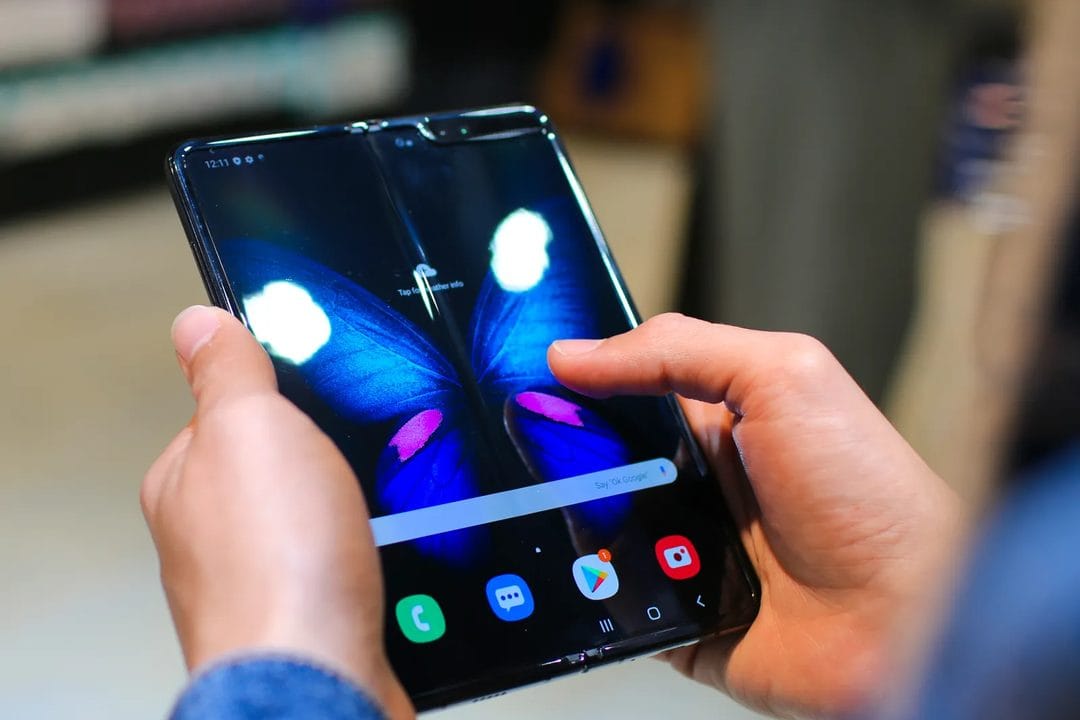
Hold a Galaxy Z Fold7 up to a window and tilt it. Three years ago you'd see a faint valley running down the middle of the screen, a permanent reminder that you paid $1,800 for a phone that folds. Do the same thing with this year's model and the crease is still technically there — but you have to know exactly where to look for it, and most people never notice it during actual use. That single detail is why foldables finally stopped being a rich person's experiment and started showing up in regular pockets.
What Actually Changed Between 2023 and Now
The crease problem was never really about the glass. It was about the hinge underneath it, and the hinge is what every manufacturer quietly rebuilt. Samsung's current "Flex" hinge on the Z Fold7 uses a wider distribution plate that spreads the fold across more contact points, so the ultra-thin glass on top bends in a gentler arc instead of a sharp V. Google did something similar with the Pixel 9 Pro Fold, and Honor's Magic V3 — still barely sold in the US outside importers — pushed the whole phone down to 9.2mm folded, thinner than a lot of phones from five years ago that didn't fold at all. None of these fixes happened overnight; they came out of three straight product generations where reviewers hammered the same complaint until engineering teams had no choice but to address it. And weight dropped alongside thickness — the Z Fold7 now sits closer to 236 grams than the near-270-gram bricks Samsung was shipping in 2022.
Hinge durability numbers moved too, and this is the stat worth remembering if you're comparing spec sheets: Samsung now rates the Z Fold7 hinge at 200,000 fold cycles. Open and close it 100 times a day and that's roughly five and a half years before the manufacturer's own testing says you should expect wear. Motorola rates the Razr+ similarly. These numbers come from lab testing on a machine, not your actual pocket, but they're a real jump from the 150,000-cycle ratings that were standard two generations ago.
The Weak Points Nobody's Marketing Department Talks About
None of this means foldables are now as tough as a slab phone. They're not, and pretending otherwise does readers a disservice.
Water resistance is the clearest example. Most current foldables carry an IP48 rating — full protection against dust, decent protection against water — which sounds reassuring until you compare it to the IP68 rating on a regular iPhone or Galaxy S25. The gap exists because sealing a hinge against dust ingress while still letting it flex hundreds of thousands of times is a genuinely hard engineering problem, and nobody has fully solved it yet. Drop a folded phone in a puddle for a few seconds and you're probably fine. Take it into the shower or drop it in a pool and you're gambling with a $1,800 device.
Screen protection is the other catch, and it's the one that surprises new buyers most. You cannot put tempered glass over a foldable display — the glass would crack the instant the phone bends. Every foldable ships with a factory-applied plastic polymer layer instead, and that layer scratches more easily than the glass on a normal phone screen. Samsung and most third parties sell replacement protectors for around $25–$40, and if you're the type who tosses your phone in a bag with keys and loose change, budget for replacing it every six to nine months.
Who Should Actually Buy One This Year
Buy a book-style foldable — the Z Fold7, the Pixel 9 Pro Fold, the OnePlus Open — if you regularly do real work on your phone: reading long documents, running two apps side by side, taking notes in a meeting. The inner screen genuinely changes how those tasks feel, and once you've split a spreadsheet and an email into two panes on a 7.6-inch unfolded display, going back to a single 6.7-inch slab feels cramped in a way it didn't before you tried the alternative.
Skip it if your phone use is mostly scrolling, texting, and taking photos. A $900 Galaxy S25 or a $799 iPhone 16 will do all three just as well, survive a toilet drop without a second thought, and cost half as much. There's no shame in that choice — most people don't need a second screen folded inside their phone, they need a phone that works every single day without a repair bill hanging over it.
The flip-style phones — the Razr+, the Galaxy Z Flip7 — are a different calculation entirely. You're not paying for a bigger workspace; you're paying for a phone that's genuinely small in your pocket and a cover screen that handles notifications, photos, and quick replies without ever opening the main display. If that cover-screen convenience appeals to you and you can live with roughly 200,000 open-close cycles of lifespan, a flip phone is one of the few gadget purchases in 2026 that still feels a little bit like the future.
The Cost of Ownership Nobody Mentions at Checkout
A foldable's sticker price is only the opening number. Trade-in value is the part that catches people off guard eighteen months in — carriers and Samsung's own trade-in program consistently value a two-year-old Z Fold at 30–40% less than a comparably aged Galaxy S-series phone, because resale buyers price in hinge wear the same way used-car buyers price in mileage. That's not a reason to avoid the phone, but it does mean the "I'll just sell it and upgrade" plan works worse here than it does on a normal flagship.
There's a genuine counterpoint worth sitting with, though: if you keep phones for four or five years instead of trading up every cycle, the math flips back in the foldable's favor. You're spreading an $1,800 purchase over roughly 1,800 days of use — under a dollar a day — and getting a second screen's worth of utility the entire time. The people who regret a foldable purchase are almost always the ones who bought it expecting to flip it in a year. The people who are happy with theirs bought it planning to keep it.
What to Check Before You Buy
Go to a store and actually fold the display shut with the phone flat on a table, then run your fingernail across the crease under bright overhead light. If you can catch your nail on it, that's a rougher hinge than the marketing photos suggest.
- Check the fold-flat gap — cheaper hinges leave a visible sliver of light between the two halves when closed; the better ones close completely flush.
- Ask about the warranty terms for hinge failure specifically, not just the standard one-year coverage, since hinge wear is the single most common out-of-warranty repair on these devices.
- Price out a screen replacement before you buy, not after you crack one — Samsung charges roughly $500–$700 for an out-of-warranty inner-screen replacement on the Z Fold7, and that number should factor into whether the phone actually fits your budget.
- If you're on the fence, Samsung Care+ and similar carrier protection plans run $12–$17 a month and typically cover one or two screen repairs at a reduced fee — worth the math before you decide the phone itself is unaffordable.
Case options are still thinner than they should be for a category this expensive. Book-style folds get decent third-party coverage now, mostly from Spigen and Samsung's own official cases, but flip phones remain hit-or-miss — measure twice before ordering online, because a hinge-blocking case is worse than no case at all.
The Honest Bottom Line
Foldables crossed a real threshold this generation. The crease is fainter, the hinge lasts longer, and the software finally treats the extra screen real estate as a feature instead of an afterthought. What hasn't changed is the price gap and the durability gap against a normal phone — both are smaller than they were, neither is gone.
If you've been waiting for foldables to become a sensible mainstream purchase rather than an enthusiast toy, this is the closest they've gotten. Just walk in knowing exactly which trade-off you're accepting, because the sales floor won't volunteer it for you.