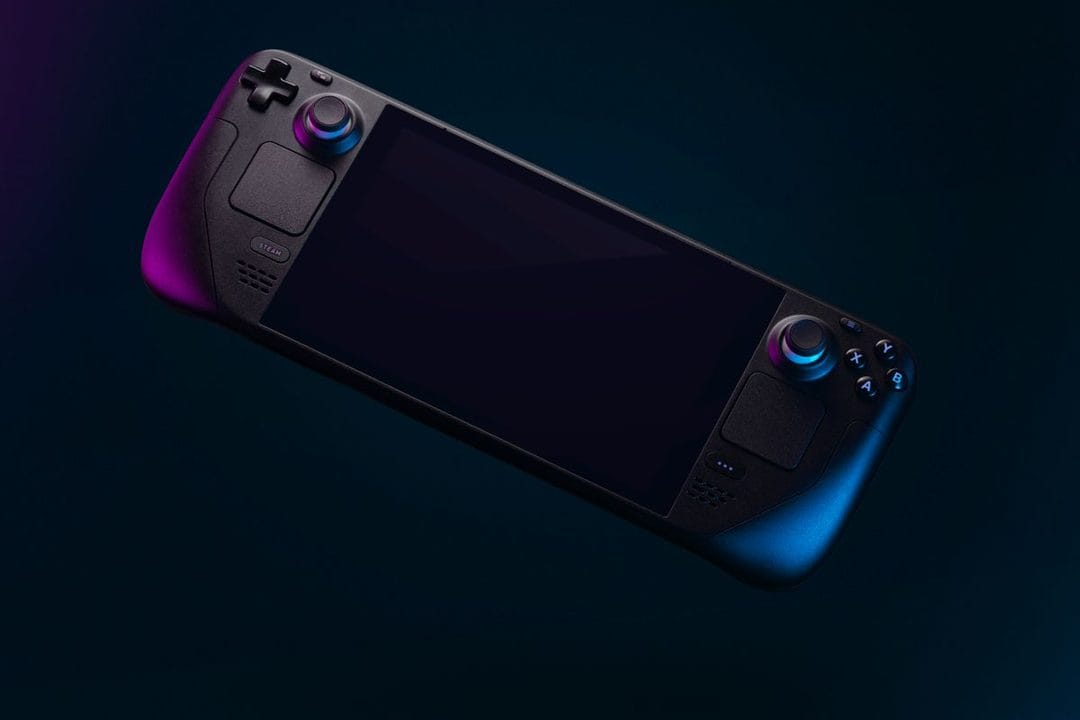
Stand in the PC gaming aisle at a Best Buy or Micro Center this month and you'll see the same scene play out every few minutes: someone picks up a Steam Deck, turns it over, sets it down, then picks up a Legion Go instead, weighs it in their hand like they're buying produce, and looks genuinely stuck. Three years ago there was one real option. Now there are five, they all cost more than a console, and the sales rep behind the counter is just as unsure which one to recommend as the customer is.
That confusion is fair. A handheld gaming PC is a strange product category — part laptop, part Nintendo Switch, part space heater if you push it hard enough — and the pitch has shifted every single year since Valve shipped the original Steam Deck in 2022. What hasn't shifted is the core trade-off: you're buying full Windows or SteamOS gaming in your hands, with all the compatibility that implies, in exchange for battery life that rarely clears three hours and a price tag that starts around $400 and climbs past $1,000 fast.
What you're actually buying
A handheld gaming PC is a small laptop with the keyboard removed and joysticks bolted on. Inside is a real x86 processor — usually an AMD Ryzen Z-series chip — running either SteamOS (Valve's Linux-based system) or full Windows 11. That distinction matters more than most shoppers realize walking in. SteamOS devices boot into a console-style interface, sleep and wake instantly, and just work for the roughly 20,000 games Valve has verified as Deck-compatible. Windows handhelds boot like a laptop, need Windows updates managed like a laptop, and can run literally anything — Steam, Epic Games Store, Xbox Game Pass, emulators, Photoshop if you're strange enough to want that — but you're the one keeping the OS tidy.
This is the split that decides which device is right for you before you even look at specs. If the idea of troubleshooting a driver conflict on a 7-inch screen makes your stomach turn, buy something running SteamOS. If you already own a big Xbox Game Pass or Epic library and want it all in one device, Windows is the only path, and you should budget mental energy for occasional fussing.
The 2026 lineup, honestly ranked
The Steam Deck OLED remains the default recommendation, and not because it's the newest hardware — it isn't. Valve's chip is now two generations behind AMD's latest silicon. What the Deck has instead is the smoothest software experience of any handheld on the market and a starting price of $549 that undercuts everything else with a comparable screen. Battery life on the OLED model runs 3 to 4 hours in demanding titles like Cyberpunk 2077, stretching to 8+ hours for lighter 2D or indie games. For most people asking "should I get a gaming handheld," the Deck OLED is still the honest answer.
ASUS's ROG Ally X, at roughly $799, is the strongest Windows option if you want raw power — a bigger battery than the original Ally (80Wh versus 40Wh) fixed the single biggest complaint from 2023, and the screen's 120Hz refresh makes fast-paced shooters noticeably smoother than on the Deck's 90Hz panel. Lenovo's Legion Go, around $699, throws in detachable controllers and a kickstand, which sounds like a gimmick until you're propping it on a plane tray table during a layover. MSI's Claw 8 AI+, closer to $899, is the newest of the group and runs Intel's Lunar Lake chip instead of AMD — a genuinely different architecture that trades a bit of raw gaming muscle for better battery efficiency in everyday tasks.
Skip the budget Windows handhelds under $400 unless you already know exactly what you're getting. They typically ship with 2022-era Ryzen chips that choke on anything released in the last two years, and the storage is often soldered eMMC rather than a swappable SSD — meaning that 64GB fills up after two AAA game installs and there's no fixing it.
Battery life is the number nobody wants to say out loud
Every manufacturer lists battery life the way car companies list highway mileage — technically accurate, practically useless. Run a genuinely demanding game like Baldur's Gate 3 or Elden Ring at settings that actually look good, and you're looking at 90 minutes to two hours on every device in this category, full stop. That's not a knock against any single brand — it's a physics problem. Cramming a discrete-GPU-class chip into a device the size of a paperback novel means the battery has nowhere near enough room to match a Switch's efficiency-first ARM chip.
Buy a 20,000mAh USB-C power bank if you plan to game away from an outlet for more than an hour. This isn't optional advice — it's the accessory that determines whether the handheld actually gets used on flights and road trips or ends up plugged into the wall next to your TV, which defeats half the point.
Docking and the TV question
Every handheld in this roundup docks to a TV through USB-C, and the experience genuinely rivals a console when it works. Plug a Steam Deck into Valve's $89 official dock, pair a controller, and you've effectively got a Series S-tier machine for a fraction of the footprint. The catch: none of these chips are pushing native 4K at 60fps in anything demanding. Docked gaming here means 1080p or 1440p with upscaling doing a lot of the work, which looks fine on a 55-inch screen from a couch but won't fool anyone sitting close.
Third-party docks work fine too, and you don't need the branded $89 accessory — a $25 USB-C hub with HDMI and power delivery does the same job on every device we've mentioned. Where it gets genuinely annoying is games with anti-cheat systems that flag the handheld's simultaneous mouse-and-controller input as suspicious; a small number of competitive multiplayer titles simply won't launch docked until the developer patches around it.
Who should actually buy one
Buy a Steam Deck OLED if this is your first handheld and you mostly play single-player games, JRPGs, indies, or anything from your existing Steam library. It's the least fussy device here, and $549 buys real peace of mind. Buy a ROG Ally X instead if you specifically need Xbox Game Pass or Epic titles and are comfortable being your own IT department once in a while — the extra battery capacity makes it the only Windows handheld I'd actually recommend for anyone who isn't already a PC tinkerer.
Skip this whole category if your gaming time mostly happens on a couch already connected to a TV — a used PS5 or a gaming laptop will beat any handheld on raw performance per dollar, and neither asks you to squint at an 800-gram screen for two hours. The handheld makes sense specifically because it goes where a console can't: a commute, a waiting room, a hotel room where the TV remote is a mystery. If that's not how you actually game, the extra power of a stationary setup wins every time.
One more honest caveat before you buy anything: resale value on this category has been rough. A 2023 ROG Ally now sells used for less than half its launch price, because Windows handhelds age out fast once AMD and ASUS ship the next chip. Don't buy the newest model expecting to flip it in two years — buy it because you'll actually use it this year, on this trip, in this specific dead time you're trying to fill.