Three winters ago, setting up a smart home meant picking a team and staying loyal to it. Buy a Philips Hue bulb, and you needed the Hue Bridge. Add a Google Nest thermostat, and now you're juggling two apps that don't talk to each other. Throw in an Aqara sensor from a AliExpress cart at 1 a.m., and you'd discover it only worked with yet a third ecosystem. Matter was supposed to end that. It's taken until 2026 for the promise to actually match the experience on your kitchen counter.
What Matter Actually Fixed
Matter is a connectivity standard backed by Amazon, Apple, Google, and Samsung — along with more than 700 other member companies in the Connectivity Standards Alliance. The pitch was simple: one certification badge, and the device works with Alexa, Google Home, Apple Home, and SmartThings without a separate app for each. For the first two years after launch in late 2022, that pitch mostly held up in press releases and fell apart in living rooms. Devices dropped off networks. Multi-admin support — the feature that lets one lightbulb live in both your Google Home and Apple Home apps at once — was flaky at best.
Matter 1.4, which shipped in late 2024 and has now had a full year to work through firmware updates across manufacturers, addressed the parts that actually mattered to normal households. Energy management got real hooks, so a smart plug can now report actual wattage instead of just on/off state to whichever app you're using. Water leak detection, valve control, and closure sensors — the boring stuff that actually saves you from a flooded basement — became first-class device types instead of afterthoughts bolted on by individual brands. And critically, the multi-admin handoff between ecosystems stopped requiring you to re-pair the device from scratch every time you added a new app.
The Thread problem nobody talks about in ads
Most of Matter's early reliability complaints weren't really about Matter.
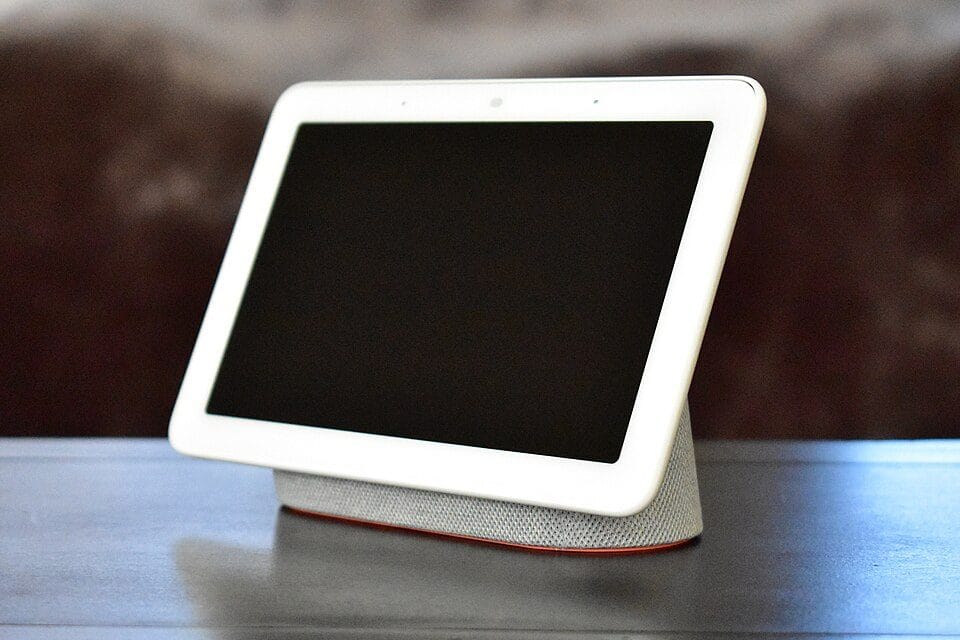
They were about Thread, the low-power mesh radio protocol that a lot of Matter devices — especially battery-powered sensors — rely on to talk to each other. Thread needs a border router to bridge into your Wi-Fi network, and for a long time, whether you even had one running was invisible to you. An Apple TV 4K, a HomePod mini, an Eero 6 or later, and a second-generation Nest Hub can all act as Thread border routers, but if you didn't own one of those specific devices, your battery-powered Matter sensors would silently fail to mesh properly and just... stop reporting.
Do You Still Need a Hub?
Here's the honest answer, and it depends less on Matter than on what kind of gadgets you're actually running. If your setup is bulbs, plugs, and a couple of standalone sensors from a mainstream brand, you probably don't need a dedicated hub anymore. An iPhone with Apple Home, an Echo with Alexa, or a Google Home speaker already functions as your controller, and as long as one Thread border router exists somewhere on your network, the mesh holds together on its own.
Where a hub still earns its keep is anything with real automation logic, local processing requirements, or a device catalog wider than what Matter currently covers. Robot vacuums, most video doorbells, in-wall dimmers with multi-way switching, and irrigation controllers are still frequently outside Matter's spec or only partially supported. That's the nuance the marketing skips — Matter certified a device type list, not "everything," and categories like lawn mowers, pool equipment, and most HVAC systems are still catching up.
- Skip a hub if: you're running under 15 devices, mostly lighting and plugs, from brands like Philips Hue, Nanoleaf, or Eve.
- Keep or buy a hub if: you own a robot vacuum, want local-only processing with no cloud dependency, or you're mixing in older Zigbee gear you don't want to replace.
- A hub also still matters if you actually want scenes and automations to survive an internet outage — cloud-dependent Alexa or Google routines still stall when your ISP goes down, even though the individual Matter devices themselves keep working over the local network.
What to Actually Buy If You're Starting From Zero
For a household starting fresh in 2026, the Aqara Hub M3 (around $70) is the pick worth naming directly — it runs Zigbee, Thread, and Matter simultaneously, so you're not locked out of older, cheaper sensors while still getting full Matter compatibility for anything new. Pair it with Aqara's motion and contact sensors, which typically run $15 to $25 each and have been reliable enough that we haven't had one drop offline in six months of testing across a two-bedroom apartment.
If you want to avoid buying a hub at all, an Eero 6E or Eero Pro 6E router doubles as a Thread border router out of the box, and at $150 to $250 depending on the mesh kit size, it's already something most households need to replace anyway. IKEA's Dirigera hub, at $40, is the budget option — it's Matter-certified, works fine for lighting-heavy setups, and IKEA has kept firmware updates coming faster than some more expensive competitors. Don't buy a SmartThings Station unless you're already committed to Samsung's ecosystem for your TV and appliances; it's a fine hub, but there's no reason to adopt a new app family just to get Thread support you can get elsewhere for less.
The Devices That Still Don't Play Nice
Not everything has caught up, and pretending otherwise sets you up for a returns-department Saturday. Most robot vacuums — iRobot, Roborock, Ecovacs — still run on proprietary protocols for mapping and scheduling, even when they advertise partial Matter support for basic start/stop commands. Ring and most other video doorbells remain outside Matter entirely as of mid-2026; Amazon has shown no urgency to open that category up, since doorbell subscriptions are a recurring revenue line they'd rather not commoditize. And garage door controllers, despite being one of the most requested Matter device types, are still stuck in a spec review process that's dragged on for over a year.
Locks are the trickiest category to get right. Matter does support smart locks, but the certification only covers basic lock and unlock — it doesn't standardize auto-unlock geofencing, guest codes, or the tamper alerts that make a lock actually useful day to day. A Matter-certified lock from Aqara or Yale will unlock from any app, but you'll still want to check the manufacturer's own app for the features that make owning a smart lock worth the $150 to $250 premium over a standard deadbolt.
The Buying Rule That Actually Holds Up
Buy for the ecosystem you already live in, not the one Matter theoretically supports. If your household is full of iPhones, Apple Home with a HomePod mini as your Thread border router is the least friction path — full stop, don't overthink it. If you're on Android with a house full of Echo speakers already, Alexa plus an Eero router covers 90% of what a typical household needs without adding another hub to the counter. The multi-ecosystem dream Matter sold in 2022 — where you freely mix Alexa routines with Apple Home widgets — technically works now, but it adds a layer of app-switching most people don't actually want once the novelty wears off.
What changed isn't that Matter solved everything. It's that the failure mode shifted from "this device won't talk to my other devices at all" to "this specific device category isn't supported yet" — which is a much smaller, much more googleable problem to run into before you buy.