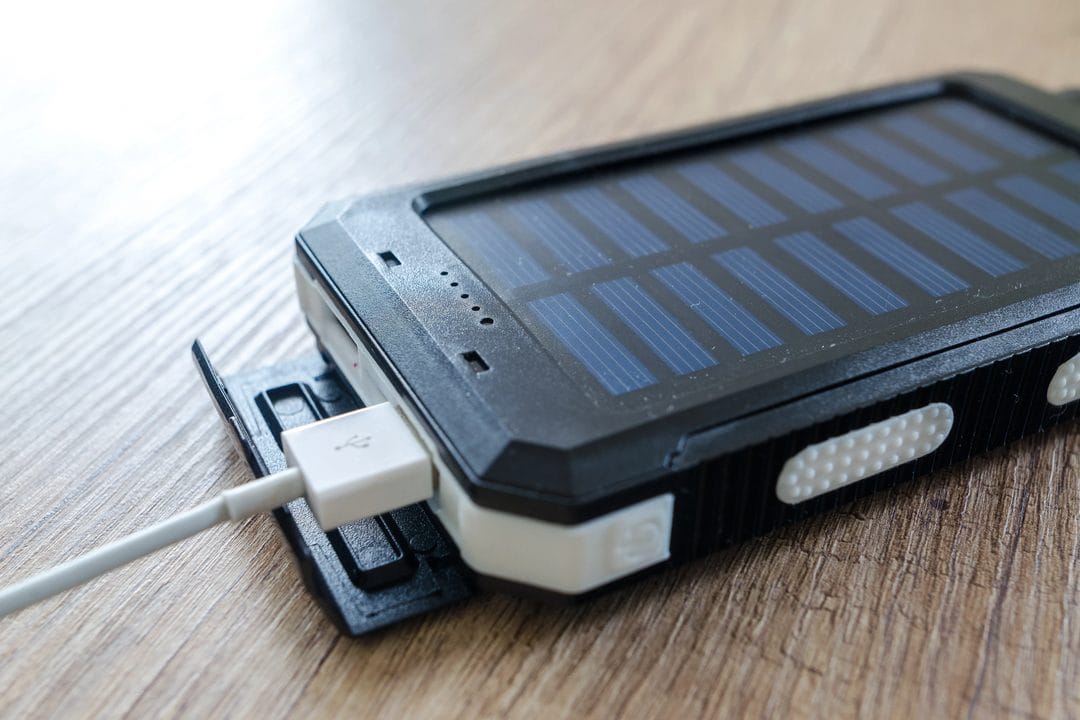
Somewhere on I-70 outside Green River, Utah, my phone hit 4 percent with eighty more miles of dead zone ahead of me and a gas station Google Map I'd already lost. The temperature gauge on the dash read 104°F, and the last town I'd seen a sign for was already forty minutes behind me. I had a power bank in the glovebox — a cheap 10,000mAh unit I'd bought at a drugstore two years earlier, mostly full, or so I thought. It pushed out barely a trickle of current, took forty minutes to add 15 percent, and by the time I found a signal again the sun was setting. I ended up pulling into the campsite an hour past dark, setting up a tent by the light of a single headlamp. That trip is the reason I now actually read the spec sheet before a power bank goes in my bag, and it's why this guide exists instead of another "top 10" list copied from a spreadsheet.
Road trip and campsite charging gear got genuinely better over the past two summers, and also genuinely more confusing. Capacity numbers ballooned, USB-C Power Delivery became the default rather than the exception, and solar panels went from novelty add-ons to something that can legitimately keep a cooler or a camp light running for a week. But bigger numbers on the box don't automatically mean a better trip. A 30,000mAh brick that weighs as much as a hardcover novel and can't legally fly with you is worse than a 10,000mAh unit that actually fits your carry-on and charges your phone twice before you need an outlet.
Capacity Numbers Don't Mean What the Label Implies
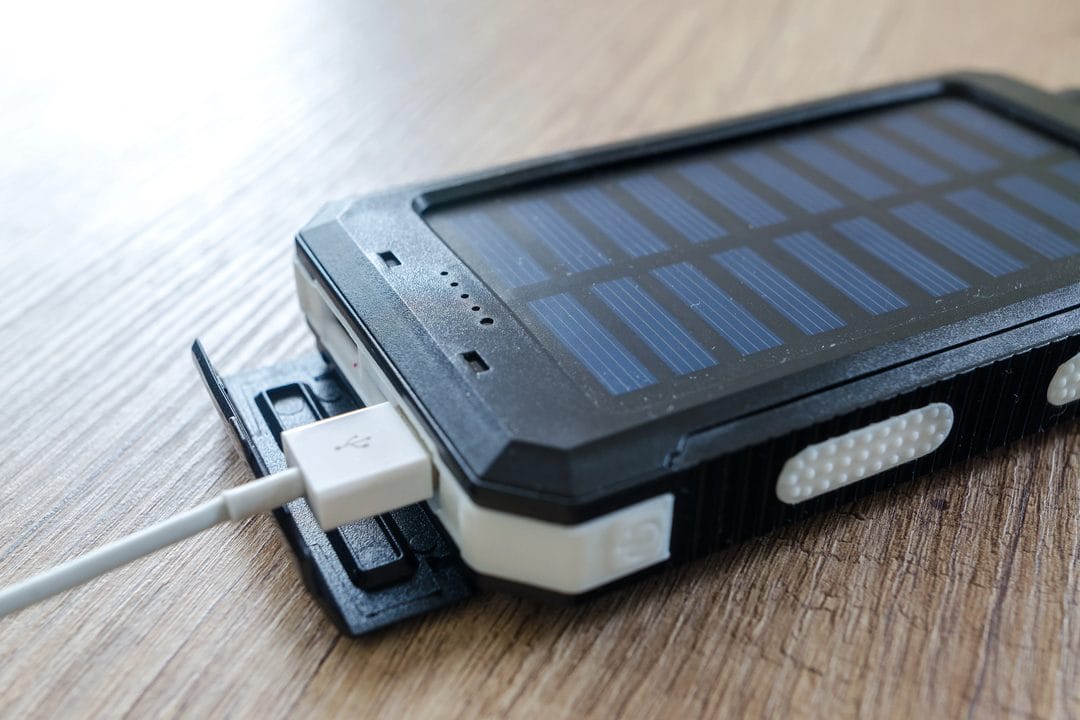
Manufacturers print the raw cell capacity — the mAh rating of the lithium cells inside — not what your phone actually receives. Voltage conversion loses roughly 20 to 30 percent of that capacity along the way, so a "20,000mAh" power bank realistically delivers closer to 13,000–14,000mAh to your device. That's still enough for about three full charges on an iPhone 16 or a Galaxy S25, but it's not the four-plus charges the packaging math implies if you just divide the big number by your phone's battery size.
Watt-hours (Wh) matter more than mAh once you're comparing across brands, because Wh accounts for voltage and gives you an apples-to-apples number — and because airlines regulate lithium batteries by watt-hours, not milliamp-hours. The FAA and most international carriers cap carry-on power banks at 100Wh without special airline approval; anything between 100Wh and 160Wh needs the airline to sign off in advance, and anything above 160Wh simply isn't allowed on a passenger flight. Checked luggage isn't an option either — every major airline requires spare lithium batteries, power banks included, to travel in the cabin, not the hold. A 27,000mAh bank at a standard 3.7V cell voltage lands right around 100Wh — which is exactly why you'll notice most of the largest consumer power banks top out just under that line. If you're driving, none of this applies to you directly. If any part of the trip involves a flight, it applies a lot.
USB-C Power Delivery, Without the Marketing Fog
USB-C Power Delivery (PD) is a negotiation protocol, not a fixed voltage. Your phone or laptop and the power bank talk to each other for a fraction of a second and agree on a voltage — 5V, 9V, 12V, or 20V — and a current, and multiply those to get the wattage you actually see. A 20W power bank charging an iPhone will hit roughly 18–20 watts; the same bank plugged into a MacBook Air will negotiate down and trickle-charge at a fraction of what the laptop wants, because the bank simply can't offer more.
This is where a lot of buyers get burned without realizing it. A power bank rated "100W" usually means 100W total across all its ports combined, not 100W to each device simultaneously — plug in a phone and a laptop at once and the bank splits its budget, often unevenly, and neither device charges at full speed. And the cable matters as much as the bank: a basic USB-C cable that shipped in the box with a $15 phone charger is frequently rated for 60W or less, which quietly caps a 140W-capable power bank down to a third of its potential output. If your gear isn't charging as fast as the box promised, check the cable before you blame the bank.
Power Banks Worth Actually Packing This Summer
For weekend trips and day hikes
Anker's Prime 20,000mAh power bank (around $90–100, roughly 100W output with a small charge-status display built into the case) is the one I'd tell a friend to buy without hesitation — it charges a phone fast, tops up a tablet respectably, and its digital readout actually tells you real remaining capacity instead of the usual four vague LED dots. Nekteck's basic 10,000mAh USB-C bank, closer to $25–30, is the better call if you just need a backup for a single phone over a weekend and don't want to think about it further.
- Anker Prime 20,000mAh — best all-rounder for a glovebox or daypack, roughly $90–100
- Nekteck 10,000mAh USB-C — cheap, light, does one job well, around $25–30
- BioLite Charge 40 PD — rugged casing that survives being tossed in a truck bed, and it doubles as a genuinely useful flashlight when you're setting up a tent after dark, roughly $50
For multi-day road trips and basecamp charging
This is where "power bank" starts blurring into "portable power station." Jackery's Explorer 300 Plus (about $250–280) and EcoFlow's River 3 (roughly $170–220 depending on the bundle) both cross into small power-station territory — enough capacity to run a mini fridge overnight, charge a drone battery and a laptop at the same time, and still have juice left for phones the next morning. Neither is something you'd carry on a plane, and neither needs to be; they live in the trunk for the whole trip.
Solar Chargers: Genuinely Useful, or Expensive Insurance?
Most road trippers don't actually need one.
That's the honest answer nobody selling solar panels wants printed on the box: a folding panel is a slow, weather-dependent trickle charger, not a fast-charging solution, and if your trip involves reliable stops at gas stations or campground outlets every day or two, you're paying for capability you'll never use. Where a panel earns its space in the trunk is multi-day backcountry camping, van life stretches without hookups, or genuinely remote road trips where the nearest outlet might be two days away.
Goal Zero's Nomad 20 (around $120) and Jackery's SolarSaga 60W panel (roughly $180) are the two I'd actually recommend, and for different reasons. The Nomad 20 is compact enough to strap to a backpack and keep charging while you hike, which matters if you're moving during daylight rather than sitting still at a campsite. The SolarSaga makes more sense paired with one of the power stations above — on a clear July afternoon it can refill an EcoFlow River 3 from empty to roughly 80 percent in four to five hours, though that number drops fast under partial cloud cover or if the panel isn't angled directly at the sun. Cloudy-day output can fall to a third of the rated wattage, which is the gap between "solar charging works great" reviews written in Arizona in June and the same panel's real performance on a hazy coastal morning in Oregon.
Skip the ultra-cheap folding panels under $40 sold as "21W dual USB solar chargers" unless you're genuinely only trying to keep a phone alive during casual daylight hours — the actual cell efficiency on those tends to be poor enough that you'll see closer to 5–8W in real sunlight, and the exposed USB ports have no weather sealing worth trusting near a lake or in a sudden downpour.
Mistakes That Wreck a Trip, Not Just a Charge
Buying more capacity than you'll use before the trip ends is the most common one. A 30,000mAh brick sounds like insurance, but if you're only gone for four days and recharging it every night at the campsite outlet anyway, you paid for weight and bulk you never touched. Match capacity to how many nights you'll actually go without an outlet, not to the biggest number on the shelf.
A short list of the other ways this goes wrong, roughly in order of how often I see people hit them:
- Packing a power bank that's already been sitting half-charged in a drawer for a year — lithium cells lose capacity in storage, and a bank that reads "full" on arrival can still under-deliver
- Assuming any USB-C cable works with any power bank, when cheap cables silently cap wattage
- Leaving a power bank in a hot car during the day, which degrades battery health faster than almost anything else you'll do to it
- Trying to fly with a power bank over 100Wh without checking the airline's policy first, and finding out at the TSA checkpoint instead
The car dashboard one deserves its own mention. Cabin temperatures inside a parked car in direct July sun regularly exceed 140°F, and lithium-ion cells start losing meaningful long-term capacity above roughly 95°F — leave a power bank on the dash for an afternoon at a trailhead and you're shortening its usable life every single time, even if it still charges your phone that evening.
None of this means you need to obsess over spec sheets before every trip. Buy one solid power bank sized to your actual trip length, pack a cable rated for its real wattage, and only add a solar panel if you're genuinely going more than two days without an outlet in sight. Everything past that is just weight in the trunk.