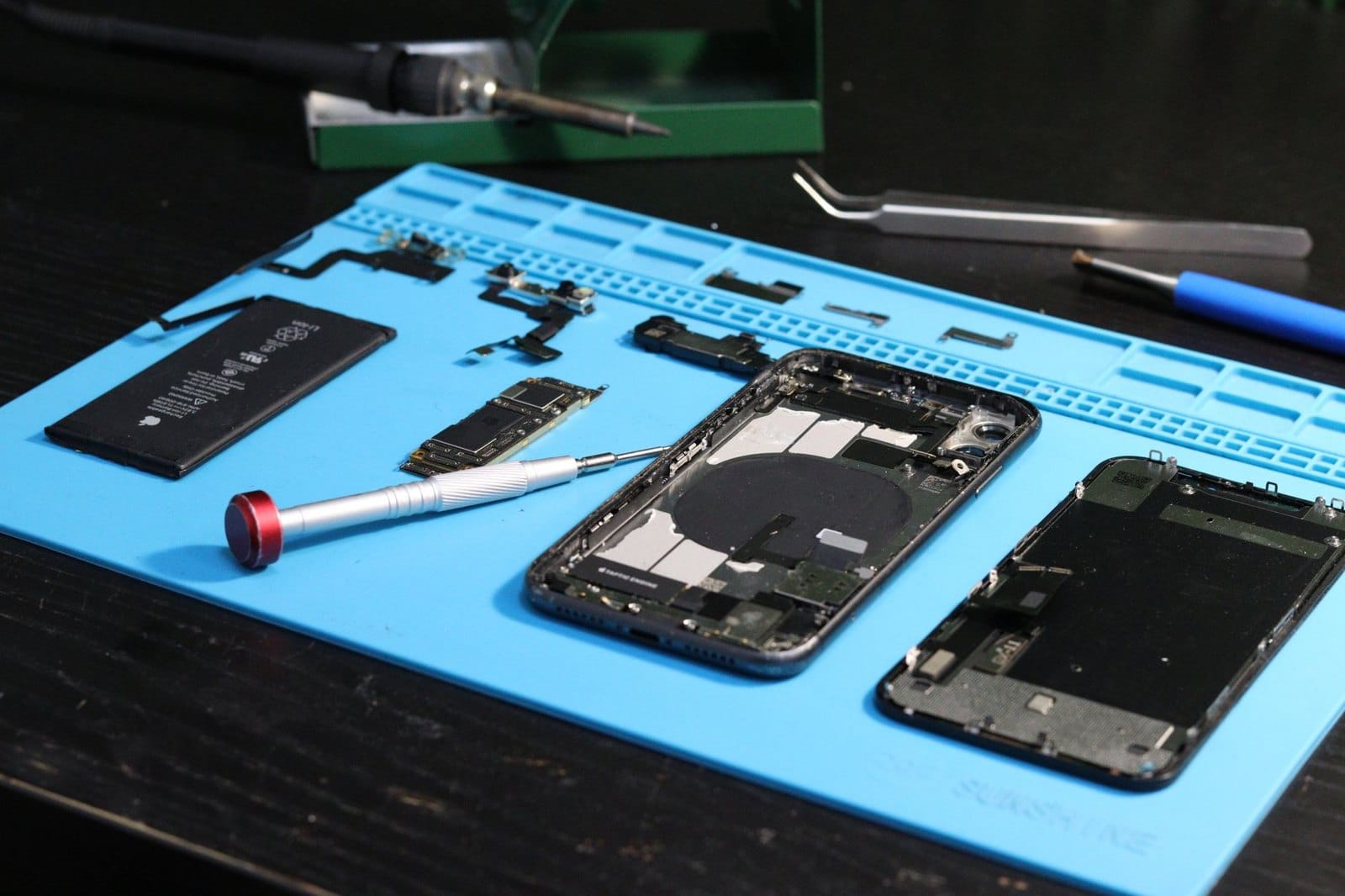
Last month a friend handed me his three-year-old Pixel with a battery that lasted about as long as a sneeze. Replacement quote from a local shop: $89, plus the risk that prying the glued screen would crack it. He bought a new phone instead. That little decision, multiplied across a few hundred million people, is exactly the behavior the gadget industry spent fifteen years engineering into us — and it's the thing that's quietly starting to break.
Something shifted this year. It wasn't one dramatic announcement; it was a pile of smaller ones stacking up until the floor changed. The EU's removable-battery rule, which requires that consumers be able to swap the battery in most phones and portable devices, is now in force and reshaping how manufacturers design hardware globally, because nobody builds a separate phone just for Brussels. Oregon, California, Minnesota, and New York all have right-to-repair laws on the books, with Oregon's parts-pairing restrictions among the most aggressive in the country. And the companies that fought all of this hardest are now, awkwardly, selling repairability as a feature.
What "repairable" actually buys you
Here's the part people miss: this isn't really about saving a trip to the repair shop. It's about how long the thing stays worth owning. A phone you can re-battery for $40 in parts is a phone you keep for five years instead of three. Over that span you're not just saving the cost of a replacement — you're skipping the $200 in "trade-in value" the carrier was going to give you for a device that was actually worth four times that.
The Framework Laptop made the clearest case for this. You buy the machine, and two years later you swap the mainboard for a faster one without throwing away the screen, the keyboard, the chassis, or the hinges you already paid for. It is, frankly, more expensive up front than a comparable Dell, and the performance-per-dollar on day one isn't its selling point. The selling point shows up in year four, when the equivalent sealed ultrabook is e-waste and yours has a new processor and the same comfortable keyboard you've been typing on the whole time.
Phones are catching up, slower. The Fairphone 5 ships with a screwdriver in the box and a screen you can replace in about ten minutes, and the company promises software support stretching toward the end of the decade. It's not sold widely in the US, which is the catch — but it's the reference point everyone else is now being measured against.
The earbuds problem nobody wants to talk about
True wireless earbuds are the dirtiest secret in this whole conversation. The lithium cells inside an AirPods-style bud are so small that after roughly 500 charge cycles — call it eighteen months of daily use — they hold a fraction of their original capacity, and there is no battery to swap. The bud isn't broken. It just can't make it through your commute anymore. So you replace a $179 product because of a component that costs about ninety cents.
There's no clean fix here yet, and I won't pretend otherwise. Fairphone's Fairbuds tried, with replaceable battery cells in each bud, and the trade-off was a slightly bulkier case and less polish than Apple's. That's the honest tension in this entire category: the most repairable version of a thing is almost never the sleekest one. You're choosing between a gadget that's gorgeous for two years and one that's serviceable for five.
My take? For earbuds specifically, buy cheap and expect to replace them, or buy a pair you can actually re-cell and accept that it'll be a little chunkier. Spending $250 on premium sealed buds is the worst of both worlds — luxury money for a disposable product.
How to shop differently in 2026
The good news is you don't need to become an activist or learn to solder. You just need to read the spec sheet for two things most people ignore.
- iFixit repairability score. They tear down nearly every major device and assign a 1–10 score. Anything below a 5 means the manufacturer is betting you'll buy a new one before you'd ever open this one.
- Length of guaranteed software updates — because a phone with a swappable battery is useless if it stops getting security patches in year three. Samsung and Google now promise seven years on their flagship lines, which is genuinely the bigger deal here.
- Whether replacement parts are sold to the public at all, and at what price. A repairable design with no parts supply is just marketing, among other tells.
One caveat worth sitting with: repairability and water resistance pull against each other. The gaskets and adhesives that keep your phone alive in the rain are the same ones that make the back panel a nightmare to remove. Some of that glue isn't planned obsolescence — it's the IP68 rating you actually wanted. So don't treat a sealed phone as automatically evil. Ask instead whether the seal is doing a job or just keeping you out.
The companies are reading the room
Apple now runs a Self Service Repair program and sells genuine parts and manuals — something that would have been unthinkable in 2019. Samsung partnered with iFixit, then quietly walked part of it back, which tells you the commitment is real but reluctant. Google sells Pixel parts through iFixit directly. None of these companies woke up virtuous; they woke up to regulators in four states and a continent across the Atlantic.
What that means for you is leverage you didn't have a few years ago. The next time a screen cracks, get the part number, check whether the official store sells it, and price the do-it-yourself path before you let a salesperson talk you into a $1,000 upgrade. Half the time the repair is a $50 part and a YouTube video. The other half it genuinely isn't worth it — but now that's your call to make, not a decision baked into the glue by someone who'd rather sell you a new one.