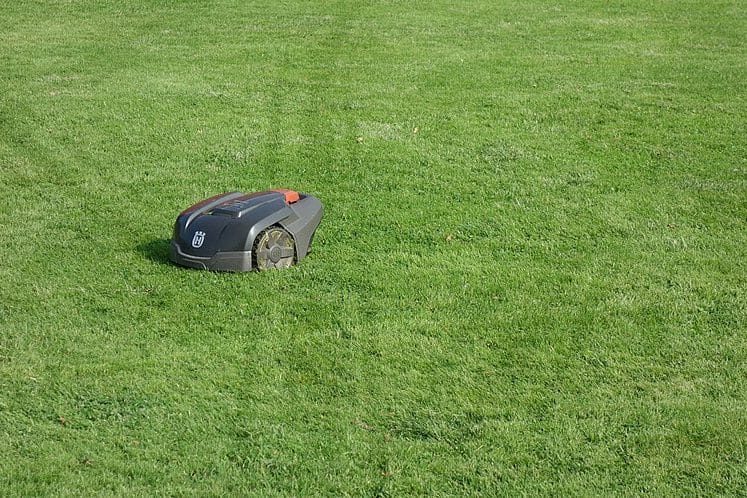
Somewhere around the fourth cut of a hot July, the math on a robot lawn mower stops feeling theoretical. You've sweated through another Saturday morning pushing a gas mower across a yard that somehow looks the same three days later, and the $1,500 price tag on a wire-free robot suddenly seems less like an indulgence and more like an hour of your weekend back. That shift in thinking is why 2026 has turned into the year robot mowers actually became a mainstream purchase in the United States rather than a gadget-blog curiosity.
The Wire Finally Went Away
For most of the last decade, buying a robot mower meant burying hundreds of feet of boundary wire around your property before the machine could do anything useful. That changed once RTK (real-time kinematic) positioning and onboard GPS became affordable enough to put into mid-priced models instead of just the $3,000-and-up flagships. Segway pushed wire-free navigation into its Navimow line at under $1,500, and Worx followed with the Landroid Vision series, which pairs GPS with a front-facing camera to spot obstacles a satellite signal alone would miss. Husqvarna, the brand most homeowners already trust for the wired version, brought the same RTK approach to its Aspire line rather than let newer competitors own the wire-free conversation. The practical result: setting up a new mower in 2026 usually takes an afternoon of walking the perimeter with an app instead of a weekend with a shovel and a wire cutter, and most buyers report the mower is already cutting grass by dinner.
What Your Money Actually Buys
Three price tiers cover almost everything on the market right now. Budget wired models, still sold by Worx and Husqvarna for buyers who don't mind burying a boundary wire, run $600 to $900 and handle small, simple lawns under a quarter acre. Mid-range wire-free mowers, the category most homeowners actually want, land between $1,200 and $2,000 — the Segway Navimow i105N and the Worx Landroid Vision M500 both sit in this range and cover up to half an acre. Premium multi-zone machines built for bigger, more complicated properties start around $2,500 and climb past $3,700 for something like the Mammotion Luba 2 AWD, which adds all-wheel drive for hills a standard two-wheel mower would just spin out on. A newer entrant, EcoFlow's Blade, slots into that same premium bracket near $2,999 and is worth watching rather than buying on faith in its first full season. None of that spending is automatic, either: a lot of buyers with a flat, open half-acre lawn end up paying premium-tier money for AWD traction and multi-zone routing they'll never actually need, when a $1,400 Navimow would mow the same lawn just as well.
Smart Home Integration Is Still Mostly a Rumor
Robot mowers are still mostly islands in the smart home. Matter, the shared standard that finally let smart plugs and light bulbs talk to Alexa, Google Home, and Apple Home without three separate apps, hasn't meaningfully extended to outdoor lawn equipment yet. What you get instead is app-specific: Husqvarna's Automower Connect app exposes basic start-stop-dock routines to Alexa, Segway does the same through its own skill, and neither offers the kind of deep automation you'd get from a Matter-certified thermostat. If tying your mower into a broader smart home routine matters to you, temper your expectations — you're getting a scheduling app with a voice-command veneer, not full home automation.
Before You Buy: What the Spec Sheet Won't Tell You
Yard size is the easiest number to check and the least useful one on its own. What actually determines whether a robot mower will work on your property is slope, tree cover, and how many narrow passages the mower has to squeeze through to reach every section of grass.
Tree cover is the one spec sheet number nobody prints.
RTK and GPS wire-free mowers need a reasonably open view of the sky to hold a steady position, and a yard shaded by mature oaks or a dense privacy hedge can knock accuracy down enough that the mower drifts off its mapped boundary. Most manufacturers rate their machines for slopes up to 35–45%, which sounds generous until you remember that's roughly the grade of a moderate driveway hill, not a steep backyard terrace. And if your side yard is narrower than about 24 inches between the fence and the house, check the mower's width before buying — some premium models are too wide to fit through gaps that a $700 budget mower handles fine.
Robot Mower vs. Push Mower vs. Lawn Service
Run the actual numbers over three years and the comparison gets more interesting than "expensive gadget versus cheap mower." A basic gas push mower costs $300 to $450 upfront, plus gas, oil changes, and blade sharpening that adds up to maybe $150 a year — call it $900 to $1,350 over three seasons, not counting your own time. A weekly lawn service in most mid-sized US metro areas runs $45 to $70 per visit, and at roughly 20 visits a season that's $2,700 to $4,200 over three years. A wire-free robot mower in the $1,200–$2,000 range, plus a $25 blade set once or twice a season and a few dollars of electricity, typically lands under $1,500 total over the same stretch — and it mows two or three times a week instead of once, which usually means a healthier-looking lawn with shorter clippings left to mulch back in.
The Brands Worth Considering
Husqvarna's Automower line remains the safest pick for anyone who wants a mower that's been through more than one hardware revision. The Aspire R4, priced around $2,199, adds RTK positioning to a brand that's been refining its cutting deck and rain-sensor logic since long before wire-free was standard. Worx's Landroid Vision series undercuts it on price while adding camera-based obstacle detection, genuinely useful if your dog leaves toys in the yard or your kids' bikes end up on the lawn mid-afternoon. Segway's Navimow i-Series is the fastest to set up out of the box, which makes it a reasonable pick for someone who wants wire-free mapping without spending an entire Saturday in the app. Buy the Navimow if setup speed and a straightforward app matter more to you than squeezing out the last bit of cutting precision — for most quarter-to-half-acre yards, that trade-off is the right one.
Mammotion's Luba 2 AWD is the one to recommend carefully. It's genuinely capable on slopes and multi-zone properties that would defeat a two-wheel-drive mower, and at $2,799 for the base model it undercuts Husqvarna's comparable hardware by several hundred dollars. But the companion app has shipped with enough rough edges — scheduling bugs, occasional GPS drift reports — that it's a better fit for someone comfortable troubleshooting a firmware update than for a buyer who wants to set it and forget it. If that's not you, spend the extra money on the Navimow or the Automower instead.
Who Should Actually Buy One in 2026
Buy a wire-free robot mower if your lawn is a third of an acre or larger, gets reasonable sun exposure, and you're tired of losing a weekend morning to a push mower — the $1,200-plus buy-in pays for itself against a lawn service within two summers. Skip it if your total lawn is under 2,000 square feet, where the labor savings barely register, or if your yard sits under heavy tree canopy that will fight the GPS signal all season. For everyone in between, the honest answer is to walk your own yard first, phone in hand, checking sun exposure and gate widths before checking prices — the spec sheet won't do that part for you.