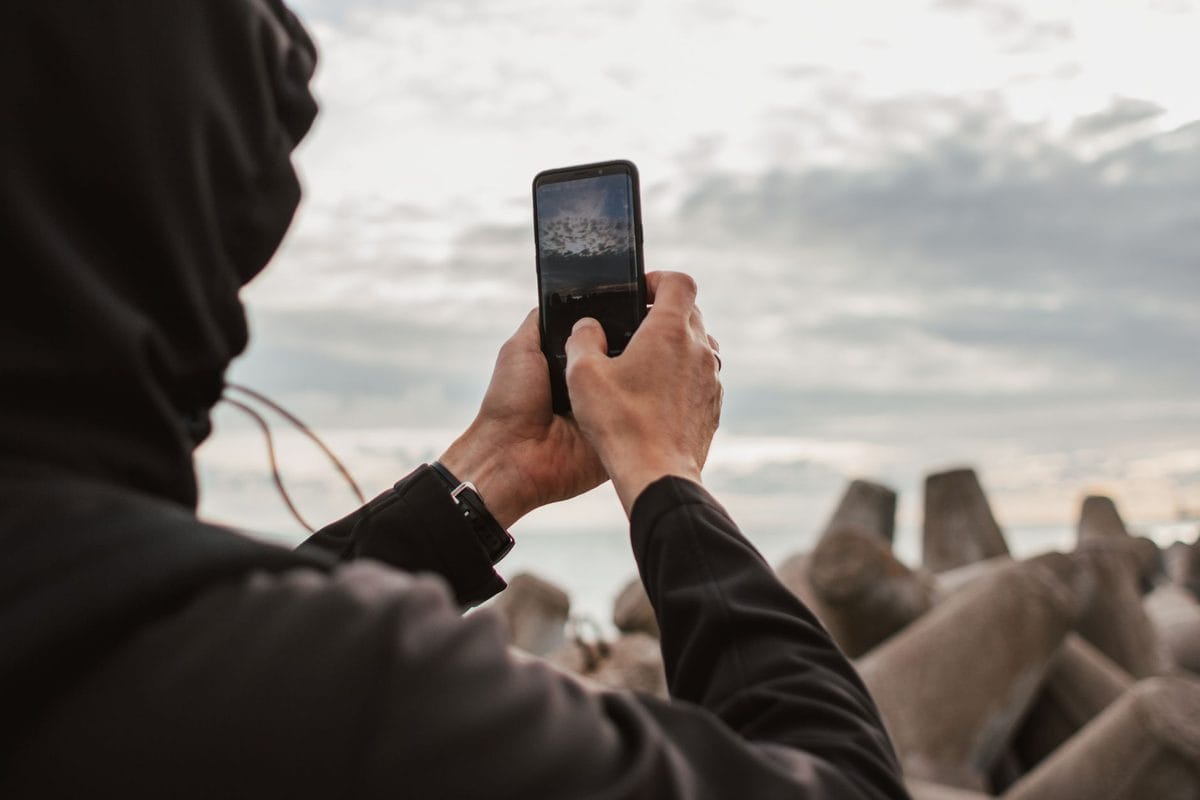
When Hurricane Helene tore through the mountains of western North Carolina in September 2024, it did something almost nobody in Asheville had planned for: it knocked out cell service across an entire region for more than a week, in towns sitting ninety miles inland that had never been flagged as hurricane country. Not spotty service — no service, full stop. Families climbed to hilltops and stood in parking lots holding phones over their heads, chasing a signal bar that wasn't coming back anytime soon. Rescue crews leaned on satellite phones borrowed from utility companies because there was nothing else that worked. Two years later, the fix for that exact scenario is already sitting in a lot of pockets right now, quietly, as a setting almost nobody has opened. The Atlantic hurricane season is climbing toward its historical peak this month, which makes this the right week to actually check.
That's the strange part about satellite messaging in 2026: the technology went from a $600 outdoor-brand accessory to a free feature buried three menus deep in a software update, and most phone owners have no idea it's there. The bigger question isn't whether the feature exists anymore. It's whether it's actually enough, or whether the $400 dedicated device is still worth buying on top of it.
What your phone's satellite feature already does
Apple built Emergency SOS via satellite into every iPhone starting with the 14 in 2022, then expanded it into full Messages via satellite on the 15 and later models, which lets you send and receive an ordinary text thread — not just a canned emergency alert — once you're outside both cell and Wi-Fi range. Google matched the feature on the Pixel 9 in 2024, routing texts through a partnership with satellite carrier Skylo rather than building its own network from scratch. Neither one is a phone call, and neither one is fast. Both require standing somewhere with a mostly open view of the sky, holding still, and following an on-screen arrow toward whichever satellite happens to be passing overhead, with roughly fifteen seconds to a couple of minutes between each message going through. It works, and people genuinely have used it to summon help from places search-and-rescue would otherwise never have found in time. It just doesn't work particularly well under a tree canopy, inside a car, or on the shadowed side of a ridge — which happens to be exactly the terrain a lot of storm evacuation routes run through.
Samsung is the odd one out here. The Galaxy S25 line shipped without a native satellite feature to match Apple's or Google's, so Galaxy owners depend entirely on whichever carrier deal reaches their phone first, rather than a fallback built into the device itself. That's worth checking before a storm, not after: a Pixel or a recent iPhone has the feature baked in regardless of carrier, while a Galaxy phone on a smaller regional carrier might currently have nothing at all.
Meanwhile, carriers are quietly finishing the job
T-Mobile has spent the better part of two years switching on Starlink Direct to Cell, a partnership that beams a signal straight from SpaceX satellites to an unmodified phone, no special chip required. The FCC's 2023 "Supplemental Coverage from Space" ruling is the regulatory opening that let this happen, and it's why AT&T and Verizon are now racing to strike similar deals instead of leaving satellite coverage to Apple and Google alone — Verizon's arrangement runs through AST SpaceMobile, a different satellite operator than the one T-Mobile picked, which is part of why coverage maps between the two carriers still don't quite match. For now, the carrier version mostly handles texting rather than photos or voice calls, and coverage still thins out fast west of the Mississippi or deep in mountain terrain. But it works on a five-year-old phone just as well as this year's flagship, since the satellite is talking to the carrier's network rather than to a chip built into a brand-new handset.
When a phone still isn't the right tool
A phone's satellite link is built for one short message every few minutes, not for real-time location tracking, turn-by-turn navigation, or six family members trying to coordinate a rescue at the same time.
That's the gap dedicated satellite communicators still fill, and it's why outdoor brands haven't disappeared just because Apple did this for free. Garmin's inReach Mini 2 runs about $400 and pairs with a monthly plan starting at $14.95 for the cancel-anytime Freedom tier, up to $64.95 for the Expedition plan with unlimited messaging and continuous tracking — a real ongoing cost most casual phone owners will never need, but a reasonable one for anyone spending a hurricane on a boat, in an RV, or checking on relatives in a spot where towers might stay down for a week rather than an afternoon. Zoleo undercuts that at roughly $199 for the device plus a $20-a-month Basic plan, syncing two-way messages to a normal phone number so contacts don't need to install anything special to reach you. Motorola's Defy Satellite Link, built on the same Bullitt hardware behind a handful of rugged phones, works as a $150 clip-on accessory instead of a standalone unit — a smaller purchase riding the same underlying network.
- A family member can watch your location update live on a map, instead of waiting on a single message you remember to send once an hour.
- A real keyboard for two-way texting, instead of fumbling an on-screen arrow toward a moving satellite.
- Battery life measured in days of standby rather than hours — most inReach units run a week or more between charges.
- Coverage that holds up off the coast of Maine or deep in the Canadian backcountry the same way it does ninety miles inland from Wilmington, since it isn't tied to any single carrier's satellite deal — among other differences that never quite make it onto a spec sheet.
None of that matters much for a weekend hiker who mostly wants a way to say "I'm fine, running two hours late." A few other edge cases — cargo ships, remote job sites, multi-week expeditions — still favor the dedicated hardware over anything built into a phone, and probably will for a while yet.
The actual price of not being able to reach anyone
If you live anywhere inside the Gulf or Atlantic hurricane belt, turn satellite messaging on this week, before the next storm makes landfall — it costs nothing on an iPhone still inside its free window, and T-Mobile has folded it into most Experience plans at no extra charge. Apple's free window has run two years from activation on every model so far, extended again with each new release, so an iPhone bought this summer is covered well past this hurricane season while an older 14 picked up secondhand might already be back to a paid tier depending on which carrier bundled it. Either way, the setup takes about four minutes and a Wi-Fi connection, which is four minutes most people keep putting off until the exact week they can't spare it. NOAA's own thirty-year climate normal puts an average Atlantic season at 14 named storms, 7 of them hurricanes — not a prediction for any single year, just the baseline that makes "it probably won't hit us" a worse bet than it feels like in July.
Skip the $400 Garmin device unless you're routinely out of cell range for work or recreation — a bad hurricane weekend, even a genuinely bad one, sits well within what the free tier on an existing phone can handle. Put that $400 toward a battery power station instead, since that's the piece of hurricane gear that actually runs out first, usually around day three, long before anyone's satellite texting quota does.
What to actually buy before the season peaks
NOAA's mid-August outlook update is usually the moment local news starts running hurricane-prep segments again, and every year those segments lead with flashlights and bottled water, never with the setting already sitting on the phone in someone's pocket. Turn it on now, while there's still Wi-Fi around to install whatever update it needs. The first time most people discover their satellite messaging was never configured is standing in a driveway with zero bars and a dead router, which is exactly the moment it stops being a four-minute job.