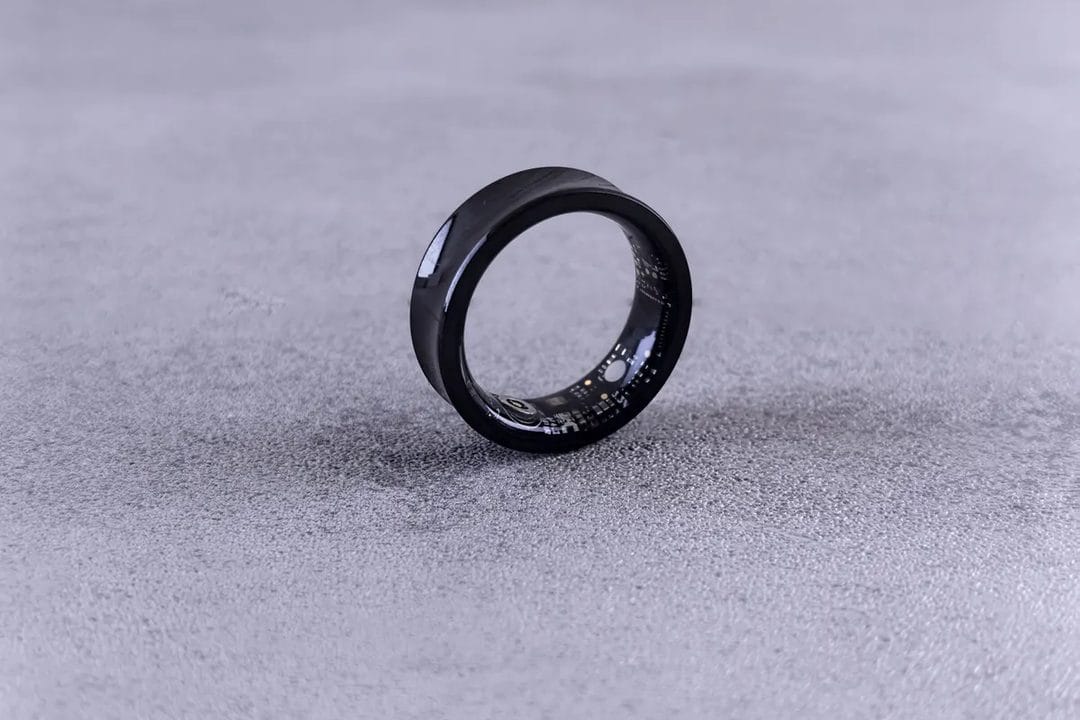
Take off your watch for a week and see how long it takes before you miss it. For most people, the answer is about two days — right around the time they'd normally glance at a sleep score over coffee. That gap is exactly what Oura, Samsung, and a handful of smaller brands are betting on with smart rings: a $279–$399 piece of titanium that tracks the same biometrics as a smartwatch without the screen, the notifications, or the compulsion to check it forty times a day.
The category has moved well past novelty. Oura shipped its fourth-generation ring in late 2024 and has kept iterating since, Samsung's Galaxy Ring is now on its second hardware revision, and RingConn and Ultrahuman have both carved out a real slice of the market by doing the one thing Oura won't: skip the subscription. Whether any of this is worth strapping to your finger depends on three things nobody puts in the marketing copy — the real monthly cost, what the sensors can and can't actually measure, and how badly sizing goes wrong if you order the wrong size the first time.
What each ring actually costs, subscription included
Oura's ring starts at $349 for the Heritage or Horizon design in silver, climbing to $399–$499 for gold, rose gold, or the newer Ceramic Heritage in interior stealth colorways. That price gets you the hardware and nothing else. Full functionality — sleep staging, readiness score, cardiovascular age, cycle tracking, the works — requires an Oura membership at $5.99 a month or $69.99 a year. Skip the subscription and the app still shows raw heart rate and step data, but the scores that make the ring useful mostly disappear behind a paywall. Over three years that's $349 plus roughly $210 in membership fees, north of $550 total. Oura does run $50–$80 discounts during Black Friday and Prime Day fairly reliably, so patient shoppers rarely pay the full sticker price for the hardware. The membership itself is billed to your account rather than bundled with the ring, which matters if you ever sell the hardware secondhand — the new owner starts their own subscription clock from zero.
Samsung's Galaxy Ring runs a flat $399 with no subscription at all — every metric, including its version of a readiness score (branded Energy Score) and sleep coaching, ships free inside Samsung Health. The catch is platform lock-in: it needs a Samsung Galaxy phone running One UI 6.1.1 or later, and while it technically pairs with other Android phones, Samsung Health's full feature set only unlocks on Galaxy hardware. RingConn's Gen 2 sits at $299 and, like Samsung, charges nothing extra — its case doubles as a portable charger, which none of the others offer. Ultrahuman's Ring Air lands at $349, also subscription-free, with a metabolic-focused feature set aimed at people also wearing a continuous glucose monitor.
If your budget is the deciding factor, RingConn is the better choice for most buyers — $299 once, no recurring fee, and a charging case that means you're not hunting for an outlet on a trip. Oura's subscription only makes sense if you're already deep in its ecosystem or you specifically want its cycle-tracking and stress features, which remain more developed than the competition's.
The one cost nobody mentions: replacement
Rings scratch, dent, and occasionally crack against door frames in a way a watch band never does. Oura sells replacement sizing kits for $0 (they're free, one per household) but a full ring replacement after damage runs the full retail price again — there's no discounted "out of warranty" replacement program the way some watch brands offer. Budget for the possibility you'll be buying this twice.
Battery life: the actual number, not the marketing number
Every ring in this category claims "up to" a battery figure that assumes you never open the companion app and never use always-on features. In real use, Oura Ring 4 lasts 4–6 days per charge; Samsung's Galaxy Ring claims up to 7 days but most reviewers land closer to 5–6 with regular sleep tracking on; RingConn's Gen 2 is the standout at 7 days per charge and up to 30 days total when you factor in its charging case. None of them have a screen to dim or wake, which is precisely why they beat smartwatches here — a Galaxy Watch 7 needs daily charging, a ring needs it weekly.
Accuracy: where the sensors are solid and where they're guessing
Sleep staging (light, deep, REM) on all four rings uses the same basic inputs — heart rate variability, skin temperature, and movement — cross-referenced against algorithms trained on polysomnography data. Oura has published the most validation studies against clinical sleep labs and consistently scores 78–86% agreement on sleep-stage classification, which is genuinely good for consumer hardware. Samsung and RingConn don't publish comparable clinical validation data, so treat their sleep stage breakdowns as directionally useful rather than lab-grade.
SpO2 (blood oxygen) and skin temperature tracking work reasonably well for spotting your own trends over weeks, but none of these rings are cleared as medical devices for diagnosing sleep apnea or anything else — they'll flag a pattern, not a diagnosis. Heart rate accuracy during rest is solid across the board; during exercise, all four lag behind a chest strap or even a well-fitted smartwatch, because a ring can't maintain the same skin contact pressure once your hand is swinging. If you actually train with heart-rate zones, this is where a ring quietly falls short — Oura and RingConn both recommend pairing with a chest strap for anything above light cardio, which somewhat undercuts the pitch that a ring can replace a fitness watch outright.
Sizing: the step that ruins this for a lot of first-time buyers
None of these companies will sell you the actual ring as your first purchase. Order a free sizing kit first — plastic dummy rings you wear for 24–48 hours to find your fit, since finger size changes with temperature, hydration, and time of day. Skip this step and order based on a jewelry ring size chart, and there's a real chance the smart ring arrives too tight to wear overnight (when most of the tracking value happens) or loose enough to spin and throw off the sensors.
Oura's sizing kit ships free and typically arrives in 3–5 business days; Samsung bundles physical sizers into some retail displays but ships a mail-in kit for online orders; RingConn and Ultrahuman both run the same free sizing-kit model. Budget an extra week before you can even order the real thing — this is not a same-day Amazon purchase for anyone ordering online for the first time.
Who should actually skip this category
Most people, honestly.
If you already wear a smartwatch and check notifications on your wrist throughout the day, a ring adds redundant hardware rather than replacing anything — you'll end up wearing both, which is exactly the outcome Oura and Samsung are trying to avoid you noticing. Rings make sense specifically for people who want overnight and passive-day biometrics without a screen: side sleepers annoyed by a watch case, people who find notifications on their wrist stressful, or anyone whose job makes a visible smartwatch impractical (medical staff, kitchen work, certain manufacturing floors).
Don't buy one expecting workout tracking to replace a dedicated fitness watch. GPS route mapping, on-device workout metrics, and real-time heart-rate zones during a run are still better served by a Garmin or an Apple Watch — none of the rings in this roundup do live pace coaching or offline maps, and none of them have a screen to check mid-run.
The buying call
For most people curious about this category, RingConn Gen 2 at $299 with no subscription is the better first purchase — it gets you 80% of what Oura does at a lower total cost, and the charging case genuinely matters if you travel. Go with Oura only if the cycle tracking, stress monitoring, and cardiovascular age features specifically matter to you and you've made peace with the annual fee. If you're already locked into a Galaxy phone, the Galaxy Ring is the obvious no-subscription pick since Samsung Health already lives on your device.
Order the sizing kit before anything else, wear it for two full days including sleep, and don't skip that step because you're impatient to get the real ring. That's the mistake that turns a $300 gadget into a drawer ornament by week three.