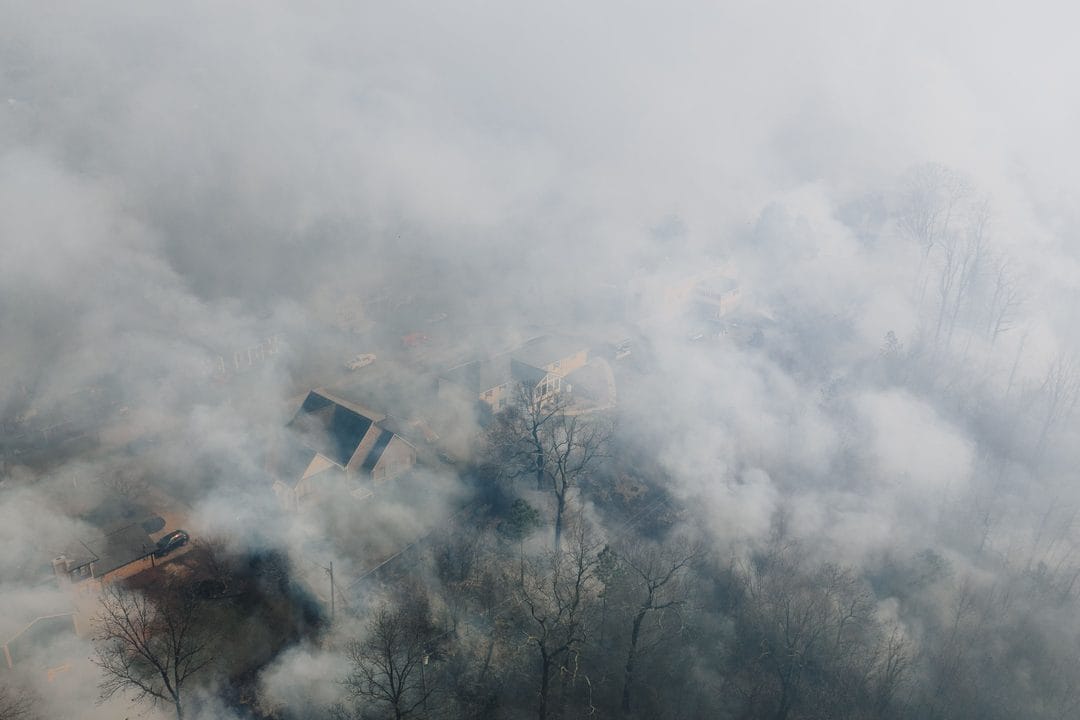
Somewhere around the third day the sky over Chicago turned the color of weak tea last August, half a million people checked their phones for an AQI reading they'd never thought about before. That number — Air Quality Index — used to live in the same mental drawer as pollen counts. Not anymore. Wildfire smoke from Canada and the American West has turned into a recurring summer guest across huge swaths of the US, and the question isn't whether it'll show up again this August. It's whether the air inside your own house is any better than the air outside it, and most people have no idea.
Why This Keeps Happening Every August Now
The pattern is no longer unusual. Canadian wildfire smoke drifted as far as New York and Washington, D.C. in 2023, and Western states from California to Colorado now expect a stretch of red or purple AQI days most summers between July and September. The EPA's AirNow.gov map is the free, official source most people check first, and it's worth bookmarking before anything else on this list — it pulls from thousands of outdoor sensors and gives a city-level PM2.5 reading in real time. PM2.5, the fine particulate matter under 2.5 micrometers wide, is the number that actually matters for health; it's small enough to get past your nose and throat and settle deep in the lungs, and it's what wildfire smoke is mostly made of.
Here's the part that surprises people: a sealed-up house with the windows shut doesn't automatically protect you. Older homes leak air constantly through gaps around doors, window frames, and dryer vents, and every time a door opens, outdoor smoke rides in with it. A 2023 Harvard School of Public Health review found indoor PM2.5 levels during smoke events typically run at 30 to 70 percent of outdoor levels in homes without filtration — better than outside, but nowhere near safe on a red-AQI day. That gap between "it feels sealed" and "it's actually filtered" is exactly where a monitor earns its keep, and it's why the people who track this closely tend to own one even in years without much smoke.
What a Monitor Actually Measures
A home air quality monitor isn't a purifier. It doesn't clean anything. What it does is give you a live PM2.5 (and often PM10, VOC, and CO2) reading for the room it's sitting in, which is the only way to know whether your specific house, with its specific leaks and its specific HVAC filter, is actually holding smoke out. The PurpleAir PA-II-SD ($289) is the one air-quality nerds and local health departments both trust, partly because its data feeds into the same public map the EPA uses. Airthings View Plus ($299) tracks PM2.5 alongside radon and humidity, which matters if you're already keeping an eye on other air quality issues in an older home. On the budget end, the Temtop M10 ($99) gives a decent PM2.5 reading without the app ecosystem, and it's the one worth pointing a renter toward first.
An indoor reading that's 40 points lower than the AirNow number for your zip code is the clearest three-second signal you'll get that your house is doing its job.
Monitor, Purifier, or Both?
Buy the purifier before the monitor if you have to choose just one. A monitor without a purifier only tells you the air is bad; it doesn't fix anything, and during an actual smoke event you won't have time to shop. The Levoit Core 300 ($99) handles a bedroom-sized room and is genuinely the one to buy if this is your first purifier — it's quiet enough to run overnight, and the replacement filters run about $25. For a full living room, the Coway Airmega 400 ($299) moves enough air to matter in an open-plan space, and Blueair's Blue Pure 211+ ($299) is the one Consumer Reports has ranked at or near the top for PM2.5 removal three years running. Both beat cheaper units on CADR, the certified airflow rating that actually predicts how fast a purifier clears a room, rather than the marketing square-footage number printed on the box.
The Free Fix That Beats Most Purifiers on a Bad-Smoke Day
If you want the cheapest option that actually works, build a Corsi-Rosenthal box: four 20x20 MERV-13 furnace filters taped into a cube with a 20-inch box fan on top, facing up. Total cost runs $60 to $80 depending on filter brand, and university testing out of Portland State and UC Davis has clocked these boxes removing PM2.5 at rates comparable to purifiers costing three times as much. It's ugly, it's loud, and it looks like a science fair project sitting in your living room. It also works, which is more than you can say for the scented candle someone will inevitably suggest instead.
The HVAC Setting Nobody Checks Until It's Too Late
If your house has central air, you already own a filtration system — most people just never touch the settings that make it useful during a smoke event. Two changes matter. First, swap the stock filter for a MERV-13 rated one; Filtrete's Smoke, Dust & Pollen line ($25 to $35 for a standard 20x25 size) is rated for wildfire particles specifically and fits most residential systems without modification, though it's worth checking your furnace manual since some older blowers can't handle the extra resistance a dense filter creates. Second, and this is the one almost nobody does, switch the thermostat fan setting from "Auto" to "On" during a smoke event, so the system keeps circulating and filtering air even when it isn't actively heating or cooling. Leaving it on Auto means the fan only runs in short bursts tied to temperature, which is fine in April and useless on a day when the AQI outside hits 180.
This only works, though, if your ductwork is reasonably sealed — a house with leaky returns pulling air from a dusty attic or crawlspace will just recirculate smoke it's drawing in from somewhere else, filter or no filter. A duct inspection runs $150 to $300 through most HVAC companies and is worth scheduling before smoke season if your house is more than twenty years old, since that's roughly when duct sealant starts failing at the joints. It's not a glamorous fix, and nobody posts about it online, but it does more for whole-house air quality than any single purifier sitting in a corner.
Where to Actually Put a Monitor
Placement trips people up more than the model they buy. Put it in the room you spend the most waking hours in — usually a living room or home office, not a hallway or entryway — and keep it at least three feet from doors, windows, and the kitchen, since cooking smoke and drafts will both throw off the reading and make you distrust a device that's actually working fine. Bedroom placement matters too, but treat it as a second unit rather than the primary one; most people check a living-room reading during the day and rely on a closed bedroom door plus a running purifier at night rather than watching a screen before bed. A monitor sitting on a shelf collecting dust after the first smoky week isn't unusual, either — the ones that stay useful are the ones synced to a phone app with a push alert, so you find out the reading spiked without having to remember to check.
Who Can Skip This Entirely
If you live somewhere that hasn't seen a red or purple AQI day in the last three summers — most of the Southeast and Gulf Coast, so far — the monitor is a nice-to-have, not a need-to-have. Spend the $200 on something else and just check AirNow when your local news mentions smoke. But if you're in the Mountain West, the Pacific Northwest, the upper Midwest, or the Northeast corridor that got hit hard in 2023, this isn't optional gear anymore. It's closer to a smoke detector: something you buy once, forget about, and are genuinely glad to have during the one week a year it actually matters.
One more thing worth saying plainly: an N95 or KN95 mask outdoors during a smoke event does more for your real-world exposure than any indoor purifier ever will, because you're breathing raw outdoor air the moment you step outside. Everything on this list covers the twenty-plus hours a day you spend inside, not the ten minutes walking to your car or waiting at a bus stop. Get both pieces right — mask outside, filtration inside — and you've actually covered the two places smoke reaches you, instead of just the one that happens to be easier to shop for.