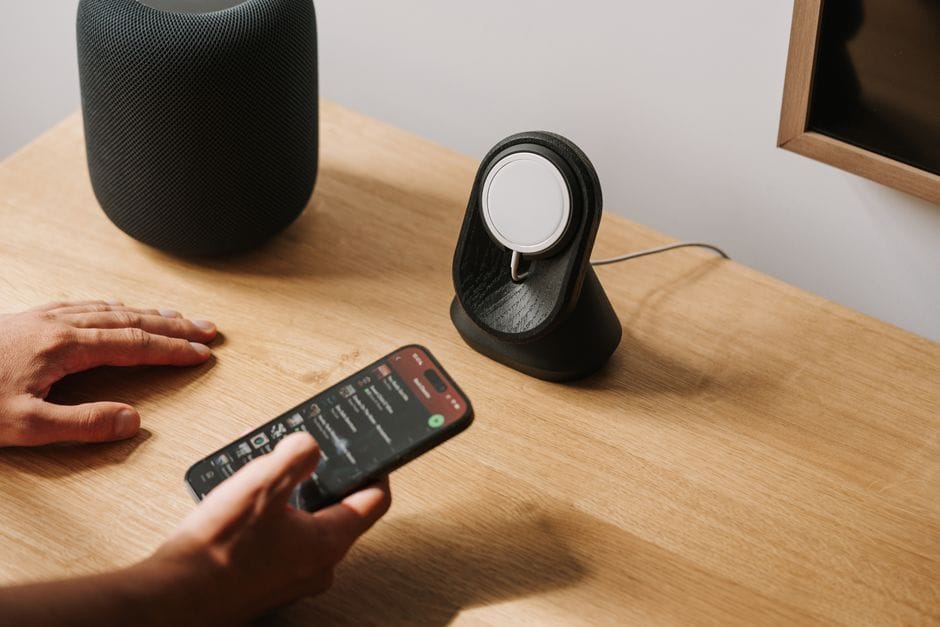
Set your phone on a pad and it charges, no fumbling for a cable in the dark. Wireless charging has gone from a luxury feature to something on most modern phones. It's undeniably convenient, but it comes with trade-offs worth understanding before you build your routine around it.
The appeal is real
The convenience is genuine. Drop your phone on a pad on your desk or nightstand and it tops up automatically. No worn-out charging ports, no cable to plug in, and you can grab and go in one motion. Pads at the desk, by the bed, and in the car make charging an afterthought.
The trade-offs nobody mentions
- It's slower: Wireless charging is generally slower than plugging in, especially for fast charging.
- It runs warmer: The process generates more heat, and heat is the enemy of long battery life.
- You can't use it freely: The phone has to sit still on the pad, so you can't comfortably use it while it charges.
- Alignment matters: Set it down wrong and it may charge slowly or not at all.
Where it shines
Wireless charging is at its best for topping up throughout the day, a few minutes here and there on a desk pad, rather than as your only charging method. It keeps the battery in a comfortable middle range without you thinking about it.
How to use it well
Treat wireless charging as convenient maintenance, not your fast overnight charge. When you need a quick boost before heading out, the cable is still faster. Keep the phone case thin enough for the charger to work through it, and don't pile the phone with anything that traps heat.
The takeaway
Wireless charging is a lovely convenience for daytime top-ups, with the trade-offs of slower speed and more heat. Use it as a supplement to cable charging, not a full replacement, and you'll get the best of it.