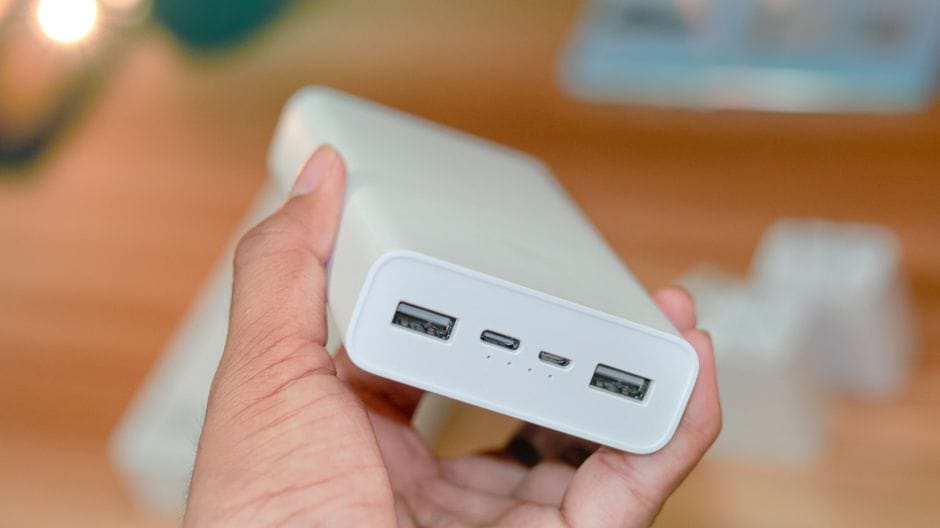
A power bank is one of those gadgets you don't think about until your phone hits ten percent in an airport with no outlet in sight. Then it's the most important thing you own. They all look roughly the same on a shelf, so here's what actually separates a good one from a brick that disappoints you at the worst moment.
Capacity, translated into real life
The big number on the box is the capacity, measured in milliamp-hours. Don't memorize the figure, translate it into charges. A mid-size power bank holds roughly one to one and a half full phone charges. A larger one holds two to three, enough to keep a phone and a pair of earbuds going through a long travel day.
Bigger isn't automatically better. A huge battery is heavier, takes longer to refill itself, and is more than you need for a day out. Match the size to the trip: a small one for daily backup, a larger one for travel where you'll be away from outlets for hours.
Ports and speed matter as much as size
- Look for a USB-C port that supports fast charging, both to charge your phone quickly and to refill the bank itself.
- Two ports let you charge a phone and a second device at once, which adds up on a trip.
- Check the output rating. A power bank that charges slowly is frustrating when you're grabbing ten minutes at a cafe outlet.
The airline rule that catches people out
This one's important. Power banks have to travel in your carry-on, never in checked luggage, and airlines cap the size you can bring. The vast majority of consumer power banks are under the limit, but the very largest ones can exceed it, and security will make you leave it behind. If you're buying specifically for flying, stick to a standard size and you'll never have an issue.
Features worth a little extra
- Pass-through charging, so you can charge the bank and your phone from it at the same time.
- A built-in cable or a magnetic version for phones that support it, so there's one less thing to forget.
- A simple charge indicator, so you know how much is left before you rely on it.
Buy from a reputable brand, match the capacity to how you'll actually use it, and keep it charged. A power bank you forgot to refill is just a paperweight with good intentions.